We are developing the social individualist meta-context for the future. From the very serious to the extremely frivolous... lets see what is on the mind of the Samizdata people.
Samizdata, derived from Samizdat /n. - a system of clandestine publication of banned literature in the USSR [Russ.,= self-publishing house]
|
Tomas at Teekay’s Coffeeshop has an excellent post on how the Czech police decided to go after the oldest profession and benefit from register all hookers in a special database. The software for this essential exercise was provided by the UN.
After raiding 475 nightclubs past weekend in a well-meant effort to combat organized slavery, the Secretary of Interior Mr Gross (nomen omen) came up with this idea that prostitutes are to be monitored. The official goal is to find out about the movement of prostitutes within the EU.
Police will enter the data about anyone who looks like a hooker, after checking and recording data on your citizen ID card (it’s mandatory to bear it at all times). Main source of data will be nightclubs and bars of certain sorts, but the police isn’t limited to these venues only.

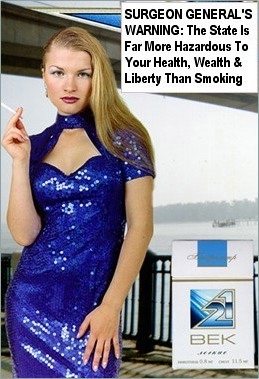
Central European babes are not known for their coy dress sense
Apparently, it is enough for a girl to wear something ‘crazy’ for her to end up in the National Hooker Registry. And there is no recourse, just as there are no rules, no checks, no appeal. Tomas concludes:
The next step will be regulated legalization: with all of them registered and monitored, the State will make a liberal gesture and allow some prostitution. Carefully controlled, with price limits, annual re-registration, you name it. Of course, it will also be much easier to monitor the customers of such services, and that could come in handy, too, right?
I think he may be on to something there…
…the state does, in the person of Mr. Justice Sumner, that is who owns your body.
Over himself, over his own body and mind, the individual is sovereign
– J.S. Mill, On Liberty, 1859
Given that so many in the ‘free world’ are subject to compulsory educational conscription, how many people are in fact ‘sovereign’ over their own minds? And in an era in which the state can force you to put certain chemicals in your body regardless of your wishes, are you sovereign over your own body? If you are a child, clearly not… and even if you are an adult, clearly not.
The mothers, the sole carers of their daughters, argued that immunisation should be voluntary and it was not right to impose it against the wishes of a caring parent and it would cause them great distress.
The elder girl had asked not to be given the MMR jab but had asked for meningitis protection. Some parents fear the MMR vaccine could be linked to autism, even though doctors and most experts say there is no evidence of a link.
Mr Justice Sumner decided both children should receive the jab because the benefits outweighed the risks.
But her views obviously count for nothing. If you do not truly own the insides of your body, then what are you? “The elder girl had asked not to be given the MMR jab”. Is she a slave? A serf? A chattel? I have fulminated before on that particular issue when confronted with people arguing for mandated mass medication… the issue is not one of health but rather ‘who owns your body’. What the judges and doctors who would use the violence of state to force other people to change the chemistry of their own bodies show us is not that they care, but rather their totalitarian mindset.
Can it really surprise us that the state does not respect individual property rights or the right of self-defense if it does not even respect the right of individuals to judge what chemicals should or should not be put in your own body? This is not a minor issue because it goes to the very heart of whether your perception of freedom is an illusion or not.
The proposed EU regulation of blogs and other forms of Internet speech being suggested by the Council of Europe (a quasi-governmental think-tank whose views have inordinate sway with the EU’s policy making elite) is very revealing about what lies at the heart of The Great European Project.
Steven Den Beste has written a rather good article on why the press is treated differently than broadcast media which use the finite resource of the electromagnetic spectrum. One can argue that as the EM spectrum is finite, it is reasonable to share out its use and as clearly not everyone can set up a radio or TV station, some rules to prevent the use of the media from becoming over mighty are justified. This is not quite how I see that issue myself but the contention is far from absurd.
One can even make the far less supportable assertion that because in reality setting up a newspaper is far beyond the means of most people simply because it is so expensive, the state should regulate the press, at least to some extent. Not surprisingly I flatly reject this notion and think the only defence individuals need against the established press are laws against libel. However the thinking behind this sort of regulation is at least easy to understand and can, if you accept the state as an essentially benevolent neutral institution (which I certainly do not), be seen as a way to prevent abuses of power by an over-mighty media corporation given the vast asymmetry of access to public opinion between a newspaper and an individual.
But when the Council of Europe start urging the EU to regulate blogs like this one, it should be clear that none of the arguments which can be applied to broadcast media and or the press apply here. As I mentioned in my previous article on this issue, if you have a cheap computer and a crummy modem, it still only takes about five minutes and no money whatsoever beyond your dial-up or broadband connection charges to set up a blog. There is no asymmetry of access to the public involved here. Granted, setting up an effective blog is another issue entirely, but simply getting viewable grievances in front of blogosphere eyeballs is simplicity itself.
So if anyone can set up a blog, and there is no finite resource in need of being allocated ‘fairly’ and there are no de facto capital related barriers to ‘market’ entry, what are we to make of this Council of Europe proposal to regulate us? → Continue reading: What is really going on in Europe?
The nanny state is invited to strike again. The British Medical Association (BMA) is proposing a 17.5 percent VAT on high-fat foods like biscuits and processed meats to solve obesity-related problems, which cost the NHS roughly 500 million pounds a year. BMA spokesman Dr Martin Breach informs us:
There is an epidemic of obesity in the UK. You are what you eat and if that is the case the British public have a huge problem. Charging VAT on saturated foods found in processed meat products like sausages, pies and pastries, butter and cream, may help save some lives.
According to government statistics, one in five men and one in four women is obese. Obesity is a serious risk factor for heart disease, high blood pressure, stroke, diabetes, muscle and respiratory problems and certain types of cancer.
One of the opposing arguments is that a punitive ‘tax’ on fatty foods would in fact work as a regressive tax since those on lower incomes generally tend to eat larger quantities of cheap, high-fat food.
Belinda Linden of the British Heart Foundation has the solution:
We need to educate people about the benefits of eating healthy foods and make them more responsible for their health. We also have to be sure that a ‘fat tax’ does not just end up penalising the poor without actually changing eating habits.
That’s right. Change their eating habits, educate the masses! Be a nanny to the whole nation!
But the BMA has even a better answer. They say that the tax would hit food manufacturers hard and have little effect on the poor.
A fat-tax will remove food manufacturers’ incentive to pump food full of fat. Instead they will fill processed foods with healthier ingredients and better selections of meat. Fat is a cheap by-product of the meat processing industry – they have mountains of the stuff and are desperate to use it, so they use it as cheap padding in foodstuffs.
Yes, let’s fool around with the markets, the food manufacturers, supply and demand. That always works! And it is much more fun that finding out what really makes people fat!
They are assuming that their medical conclusions are absolutely right when it come to understanding the way human body processes fat and what its fat consumption ought to be. They are not taking into account results of recent research that more or less vindicated the (in)famous Atkins diet that sees higher consumption of unsaturated fats as positive and desirable. No, they are going to tax fat in one big lump regardless of whether there is any scientific rationale other then three decade of their stale dogma. Atkins may not be absolutely right either, who knows, but rather than finding out, let’s mess with the markets, prices and taxes to teach people that they are not allowed to eat what they want.
Ah, but they need to be treated for serious and expensive ailments resulting from their over-indulgence on the National Health Service and at taxpayers’ expense. Fine, denationalise the health service and let people carry the responsibility for their actions.
Soon there will be a tax on dangerous sports (serious injuries), driving, cycling or walking in towns (high accident rates), watching TV (makes you fat and stupid), and breathing in London (likely to get asthma and allergies).
This is the world in which the Big Brother marries the Nanny.
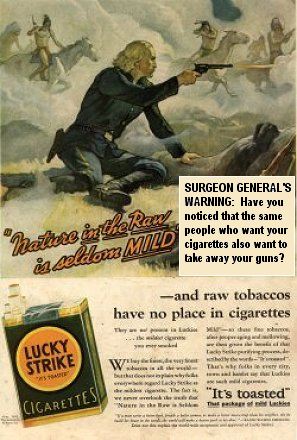
Hint: it is not about health and safety…
at least not your health and safety
Tony Martin will not be released from jail. He will remain inside for the crime of defending his property for the full five year period of his sentance (he was initially sentanced to life).
The people who make up the parole board which has just decided that he poses an unacceptable threat to people who may in the future break into his home are wonderful examples of what Sean Gabb describes as The Enemy Class.
I strongly suspect their treatment of Tony Martin, found guilty of shooting dead a serial burglar in August 1999, has more to do with the fact he refuses to apologise or acknowledge any wrong doing in his act of defending his property from predators. That a group of parole board members whose salaries are paid by the state predating taxpayers should think that way is perhaps not such a surprise.
As I said before, the lunatics have taken over the asylum. As the political process in Britain has decayed to the point that there appears to be no political cost to the established power elite for the de facto criminalisation of self-defence (never mind that the state can gun you down in the street with scarcely a murmur), and de jure criminalisation of defending your own property, be it from the state or criminals (and the difference between them narrows daily), I wonder if people may simply start going out of their way to avoid involving the state in the aftermath of any act of self-defence.
As people seem to be unclear who to blame for the state deciding it is easier to prosecute law abiding homeowners than to go after housebreakers, and thus most seem unclear who are the correct people in need of having bricks thrown through their windows given that voting seems to make no difference, I expect sales of shovels, bin-bags, deep freezers, hacksaws and baseball bats to start increasing in high crime areas. There may even be a business opportunity for specialised discreet garbage disposal companies to assist this possible future trend.
The core of that problem is rooted in the contempt for private property found amongst the statists who make up the majority of the political class in Britain. Never forget that defending yourself is the ultimate expression of self-ownership and that is something the British state cannot tolerate, particularly the overt socialist parts: these people support ‘democratic’, which is to say political, control of the means of production and that includes your body. Just ask Tony Martin… the state is not your friend.
I have been taking a break from blogging, writing about Iraq and All That this past week in exchange for a much more enjoyable time working for a sailing examination off the south coast of the UK. But a few incidents and conversations with my fellow yachties got me thinking about some connections to this wonderful pastime and political stuff.
For starters, many nautical enthusiasts like me get into sailing because it embodies a form of freedom. For sure, there are thousands of complex rules operating at sea, many of which have accumulated like barnacles on the underside of a ship over the centuries, rather like the evolution of the rule of the English common law. And while they appear to be initially baffling, the rules of the High Seas make sense and actually liberate those who follow them. (Rules such as avoiding collisions and the use of navigation beacons, etc.)
Beyond such rules, what I like about sailing is that you have to obey and respect nature to master it. You are reliant on your own skills and knowledge and the voluntary co-operation of others in the same vessel. A skipper of a boat has and requires authority to operate a boat efficiently, but he or she cannot compel folk to be on the same boat in the first place.
Drawing big cultural implications out of all this has its limits, of course, but I cannot help feeling that those cultures most infected with the spirit of liberty have strong seafaring traditions. Sailing over long distances requires a natural spirit of enterprise. It requires skills and knowledge not best acquired at the point of a gun. It encourages the spread of language, particularly flexible languages like English. And seafaring folk have, in my experience, a robust, independent attitude towards life which sits well with the liberal outlook.
I spent a fair amount of money, not to mention a lot of energy, getting my sailing qualification ticket. I feel mighty pleased to know that I can now charter out a yacht in any part of the world’s oceans. That’s freedom.
History certainly does have a knack of repeating itself here in the UK. Just as we’re about to embark on another war against a mustachioed despot, we’re all set to bring back rationing:
“A ban on marketing fatty, salty and sugary products at youngsters is one of the options supported by the study from the Food Commission campaign group.
It also backs those calling for a nationwide promotion of healthy foods and a possible “fat tax” on junk food advertising.”
But why stop there? Why not compulsory jogging every morning? Followed by an invigorating dip in ice-water? How about mandatory colonic irrigation, too?
Actually the question is redundant, because, whoever the ‘Food Commission Campaign group’ are, we all know that they have not the slightest intention of stopping there. They wll get what they want and then move on to Stage 2 (and Lord alone knows what that consists of). And because this is Britain we can all more-or-less write the script for these campaigns now. It is even becoming mundane.
I don’t know who these campaigners are but perhaps, by some extraordinary stroke of luck, it will transpire that they have some connection with the WTC attacks. Then the Americans can come and drag them all off to Camp X-Ray.
P.S. Don’t forget the hoods!
We all know about those archetypal laws. Parkinson‘s – work expands to fill the time available for its completion. The Peter Principle – people get promoted until they reach their level of incompetence. They’re useful laws. They answer basic questions. Like: Why all the crap? Why is everything done so badly?
Well, I think I may have discovered another one of these universal laws, which answers the question: Why are so many people who you would think ought to be happy instead so miserable? I give you: Micklethwait’s Law of Negotiated Misery.
It starts with the observation that more and more people are “self-managed” these days. Even people working inside giant business or governmental bureaucracies are being encouraged to think of themselves as free trading entrepreneurs, providing services in exchange for payment, in cash or in kind. Horizontal networking, self-starter, internal markets, intrapreneuring, etc. etc. blah blah blah.
Okay. You’re a self-manager, and maybe even self-employed.
There are four kinds of work you think about maybe doing.
- There’s work you love and are good at.
- There’s work you hate and are good at.
- There’s work you love and are bad at.
- There’s work you hate and are bad at.
The world pretty soon decides that you must stop doing (3) and (4) and of course, you are delighted to stop doing (4). If you insist on doing (3) you are going to have to do it as a hobby.
Which leaves (1) and (2), the stuff you are good at, and either (1) love or (2) hate.
How much do you get paid to do (1), work you love and are good at? If you are a good negotiator, then plenty, because you are good at it, and demand lots of money.
But what if you are a bad negotiator? You jump at the job and accept bad money.
How much do you get paid to do (2)? Chances are you get paid good money. Why? Because you will only consent to do work you hate if you are paid good money. So, with no great effort, you hold out for good money (even if all you thought you were doing was Just Saying No), and, because you are good at the work, you get paid good money. Eventually, someone makes you an offer you can’t refuse, and you take it.
So, if you are a bad negotiator, unable to repress your natural desire to do what you love and to avoid what you hate, you get paid bad money to do work you love, and good money to do work you hate.
Bad negotiators can have semi-good lives if they can afford to oscillate between work they love and work they hate. For a while, they do that. But, by the end of that period the only way they know to make good money is to do work they hate.
Then factor in the following circumstance. They switch to a life in which they then have to make continuously good money. Wife, kids, mortgage. Maybe an addiction to an expensive type-(3) hobby. Or maybe the life they lead just happens to get much more expensive. Clang. The gates of the prison slam shut. From then on they must do work they hate, continuously.
Result: An inexorable tendency for the “self-managed” classes to negotiate themselves into lives of permanent misery.
Is this a truth about the world? I think it is. Am I the first person to have noticed it? Surely not. Certainly not in so many words. But maybe I am the first person to have nailed this extremely widespread experience down into a simple law with a simple name.
(If so, hurrah! I love it. And how much was I paid? Bugger all.)
Comments and links please.
Professor Malcolm Law, a leading nutritionist in Britain, proposed a solution to obesity increasingly prevalent among children. As with most health professionals who are given a public platform in this country his proposal reflected the spirit of our statist age. Faced with evidence that Britons are fatter than ever and that increasing numbers of children are classified as clinically obese, he argued that politicians should seize the initiative and force food and drink manufacturers to reduce the size of products.
Professor Law believes that nothing less than an end to the ’20 per cent extra free’ culture will stave off the kind of nationwide obesity which in recent years has swept across America. He pointed to a study carried out last year which revealed that diners who ate a large meal at one sitting felt no more hungry after eating a smaller portion – if the plate was full, in most the cases the diner felt satisfied with their meal.
“Forty years ago the Government forced the tobacco companies to reduce the tar content of their cigarettes in the interests of public health. A similar approach needs to be taken today with ice creams, chocolate bars and other products.”
Note the language that our learned friend uses: “If we don’t cut down on the size of our portions we will find that in future we have a much higher incidence of obesity and heart disease. There is likely to be a large public health impact.”
This is the kind of attitude that has kept the NHS (Britain’s National Health Service) in place and indeed as long it exists the ‘public health impact’ will always be an argument for the health fascists. As long as the taxpayers are required to cover the cost of the consequences of other people’s actions, that is, a state-funded health system having to pick up the bill for the treatment of diseases associated with obesity, the ‘statist’ wolves in ‘public health’ clothing can make demands on the government to control our eating (drinking, smoking, living etc) habits.
And we know that the state is not your friend.
It appears that not everyone in Britain cravenly rolls over when confronted by authority.
After being fined for a very trivial motoring ‘offence’, Leon Humphreys reponse was, ‘fight me for it’:
“A court has rejected a 60-year-old man’s attempt to invoke the ancient right to trial by combat, rather than pay a £25 fine for a minor motoring offence.”
Not surprisingly, his invitation was declined and the fine increased. Still, you’ve got to award the guy some brownie points for his sheer cojones.
|
Who Are We? The Samizdata people are a bunch of sinister and heavily armed globalist illuminati who seek to infect the entire world with the values of personal liberty and several property. Amongst our many crimes is a sense of humour and the intermittent use of British spelling.
We are also a varied group made up of social individualists, classical liberals, whigs, libertarians, extropians, futurists, ‘Porcupines’, Karl Popper fetishists, recovering neo-conservatives, crazed Ayn Rand worshipers, over-caffeinated Virginia Postrel devotees, witty Frédéric Bastiat wannabes, cypherpunks, minarchists, kritarchists and wild-eyed anarcho-capitalists from Britain, North America, Australia and Europe.
|