There is an excellent article in the print version of The Economist describing the situation in the Congo.
That’s the Congo. Private cellphone networks work and private airlines work because the landlines do not and the bush has eaten the roads. Public servants serve mostly to make life difficult for the public, in the hope of squeezing some cash out of them. Congo is a police state, but without the benefits. The police have unchecked powers, but provide little security. Your correspondent needed three separate permits to visit the railway station in Kinshasa, where he was stopped and questioned six times in 45 minutes. Yet he found that all the seats, windows and light fixtures has been stolen from the trains.
I put this paragraph up for all those people who have not experienced this sort of thing first hand and cannot accept that the single biggest obstacle to ending poverty in Africa is the nature of African nation states. Until that changes, sending aid under all but the most controlled circumstances is more often than not either subsidising the very people who cause the problems in the first place or, at best, flushing 90¢ on the dollar down the toilet in terms of helping the people you really want to benefit from your largess.
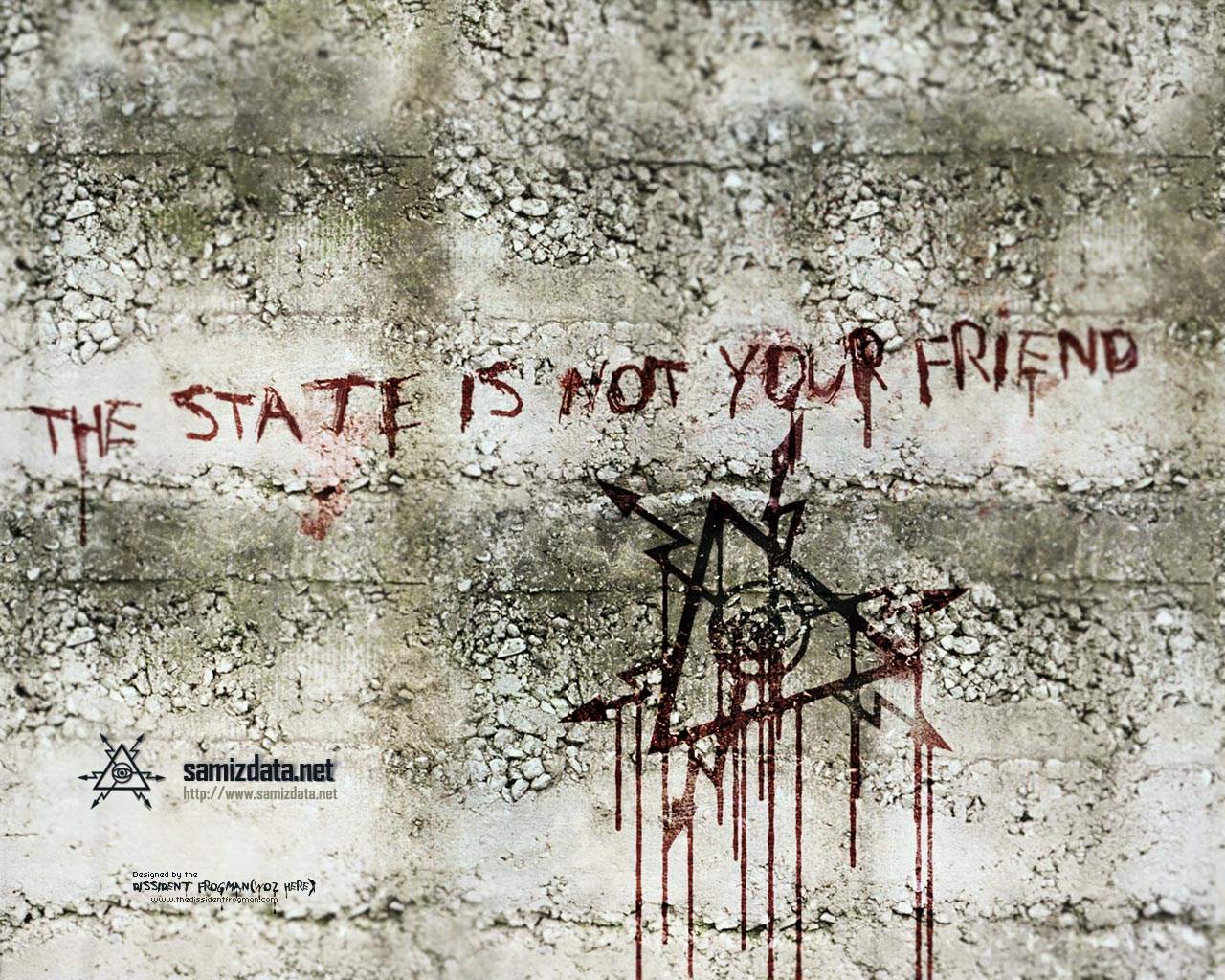
The solution? Good question, but it sure as hell is not more of the same. In Africa even more than most other places, truly, the state is not your friend.





Though one major problem in Congo, surely, is that outside Kinshasa there basically is no state?
The quoted article described the situation *in* Kinshasa :-/
Clearly there is a state, several in fact 🙂 trouble is that are ALL brutal and kleptocratic.
Isn’t one of the problems of Africa that there aren’t nation states? Usually the borders of nation states make at least some kind of sense whereas the majority of African borders make none whatsoever unless you’re a student of how the European powers carved it up.
The real problem in the situation you’re describing is the lack of any kind of civil society. In Africa, the trappings of state power (barely) mask old-fashioned patronage systems (often tribe or clan based though this may be slightly less the case in cities).
Sounds like a perfect situation for Rees-Mogg’s “Sovereign Individual”, where the protection formerly provided by large nation-states is offered by quasi-private entities, who compete for the business of anyone who has the money. Problem is, who would live in the Congo, if they had any other choice? It’s worth noting that international aid makes it possible for elites who have access to aid money and food to survive without a constituency among the people, leading to total corruption.
Sounds like Rees-Mogg got that idea from the Burb ‘Claves in Snow Crash.
I’d also add that if you omit to include debts run up by Mobutu, which after all were never meant to be used for the benefit of the people, and our governments knew that full well, we haven’t actually (until 2003) been sending much aid to the DRC. World Bank info here. I know the point you’re making about governance, and I agree. But to deny sweepingly the effectiveness of aid in general isn’t borne out by data.
The article isn’t premium content. You can see it at
http://economist.com/displaystory.cfm?story_id=4054895
But to deny sweepingly the effectiveness of aid in general isn’t borne out by data.
We have just had a multi-decade experiment in the effectiveness of aid in Africa. What we have seen is a decline in the living standards for many Africans, while billions of dollars in aid pours in.
Now, I’m sure there is plenty of data out there attempting to get around these brute facts, but I will be difficult to convince.
It seems to me that we have seen a pretty convincing demonstration of the proposition that aid alone (that is, aid given regardless of the political or economic infrastructure of a country) is either (a) useless or (b) worse than useless.
….is my nomination for quote of whole “debate”.
The Congo, and Africa in general, illustrates the sad truth that the creation of a culture and society which actually works to give people what they want is difficult and rare. It runs counter to human nature which tends to be family oriented and patriarchal. In the patriarchal system, one person (the patriarch, of course) runs the family, makes the rules and decisions, but also cares for the family. The family members fit into a rigid hierarchy in which they follow the rules and in return get taken care of. I’ve seen this enough in South and Central America, the Middle East, and East Asia to realize this is the natural human system today. Two history degrees has shown me this is the historically natural human system. It is the basis for feudalism, the monarchy, socialism, communism, etc.
Lee Harris in “Civilization and It’s Enemies” explained it best. Civilization in its various forms is an artificial construct. It takes a deliberate and conscious decision to break from the traditional culture and create a better one. Each advance in civilization has been a new invention. I find this frightens a lot of libertarians. Many libertarians see the state as the natural enemy of human advancement. Ironically, the state was historically seen as the source of human advancement because a distant capital which kept the local warlords in check, but didn’t meddle in village affairs was always better than the alternative – rampant local tyrants. Those of you familiar with British history, try to compare the Congo today to some British era – perhaps the 7th century. Then think of how long it took to develop all the institutions, norms, customs, a concept of common law, etc., which makes Britain what it is today. Then think about how much of that was accidental. In light of that the Congo has a long row to hoe, as we say in America. It needs to break from its patristic past. It’s people need to see themselves as part of groups larger than the family, the people around them less as objects for self-aggrandizement and more as fellow citizens. This will take a long, long time and may in fact never happen.
RCD: _It seems to me that we have seen a pretty convincing demonstration of the proposition that aid alone (that is, aid given regardless of the political or economic infrastructure of a country) is either (a) useless or (b) worse than useless._
Wouldn’t disagree with a word of that. But equally, the last decades’ experience shouldn’t lead anyone to conclude that aid given with proper regard to political and economic infrastructures is necessarily useless. Recent experience in Botswana and Mozambique, just to name a couple, provide tentative conclusions otherwise.
Just as an aside: I’d take (b) over (a).
Interesting post from David. This is another reason why I think we should get the hell out of Africa; it’s not just their economies that they need to sort out without paternal interference from us, but their entire structures. Most will probably choose democracy in some form or another, but some may not. We have to accept that if they want to step back into the Stone Age, it’s their choice, not ours. If they want to impose shariah law, it’s their choice, not ours. Let anyone opposing it work the changes from within, as we all have within our own civilisations.
I say, let’s give thrift a chance. No more stealing from Western taxpayers and their families in the West to send it to people they don’t know. If some wish to continue to contribute, I wouldn’t be opposed to tax relief on their donations.
Second, let’s stop imposing international institutions on them. They’re addictive and feed the wa-Benzis and no one else. And people get a false sense of the importance of these institutions, which are actually held in tremendous respect by people in some third world countries and in contempt in the rest of the world. They don’t know anything else. Sell off the UN and international agencies real estate or rent it out for genuine commercial ventures that actually produce revenues.
Third, as always, free trade. If they want to try their hand at selling to us – let them have a fair go. Let them in – not for charity, but for commercial opportunities that will actually benefit us with lower prices – and probably, tastier produce.
I rather liked the “three-ring-binder” approach that, I believe, someone from Samizdata originally proposed.
I wonder if there wouldn’t be some market for a “3-ring Corporation” which would come in and run the country while the new rules went into effect, in return for, say 1% of GDP in the fifth and final year of contract.
Oh yeah, that would be called colonialism.
Verity, I agree.
This page has been linked near the top of THIS one.
From the South African Institute of Foreign Affairs(Link)
This is not the case with the private sector in Sub-Saharan Africa. Africa’s private sector is predominantly made up of peasants and secondly, of subsidiaries of foreign-owned multinational corporations. Neither of these two groups have the complete freedom to operate in the market place because they are both politically dominated by others – non-producers who control the state. Herein lay the weakness of the private sector in Africa that explains its inability to become the engine of economic development. Africa’s private sector lacks political power and is therefore not free to operate to maximize its objectives. Above all, it is not free to decide what happens to its savings. Let us start with the situation of Africa’s peasants.
Ooops, for got to link to Cox & Forkum(Link)
Isn’t one of the problems of Africa that there aren’t nation states?
No.
Nationalism is a brutish pretext for statism, closely allied with tribalism and racism. The pursuit of the nation-state and national self-determination has killed and maimed more people and wasted more civilisation even than religion. It is no coincidence that the most tolerant, prosperous, and peaceful states and the most tolerant and prosperous places within them, tend to be the cosmopolitan multinational ones.
Africa’s (and the world’s) first problem is that almost everywhere the state is too much national, too much the possession of, and identified with, a self-selected group of people, rather than a set of neutral impersonal institutions. The other is the relative absence of developed non-state institutions. Civil society is an ecology, not a monoculture.
In Britain we have seen a colonisation by the state of the non-state on an unprecedented scale. I wonder how long before the former problem is also very evident.
THIS “David Frum’s Diary” entry provides yet another illustration of how corruption in African governments can not only prevent prosperity, but how it can tear down any that many have been achieved before.
Good article in the Economist. But what lacks is the fact that “we” are part of the game. Go, for example, here:
hir.harvard.edu/articles/1233/
“the single biggest obstacle to ending poverty in Africa is the nature of African nation states”
All African nation states, or merely the Congo? In Mozambique, for example, they’ve had an average of 7% per annum growth for the last decade. I’d say that state is doing a pretty good job.
Clearly some are better than others (hardly surprising) but when you start at around $1500 per capita, it is not hard to improve quickly.
But that said to be fair, Guebuza is light years better than a psychopath like Mugabe and there is cautious grounds for optimism that Mozambique will at least continue to struggle its way out of the very deep hole from which it is in.
Ghana, for example, is also vastly better than the Congo or Zimbabwe but that does not mean the state is still not a huge obstacle to be over come by Ghana’s quite entrepreneurial people. Nigeria is another example of where the state is a huge impediment to, well, pretty much everything. That fact some places are ‘less dreadful’ that others is still not really much cause to hold the ruling classes up as examples of a hopeful future (sad to say).