We are developing the social individualist meta-context for the future. From the very serious to the extremely frivolous... lets see what is on the mind of the Samizdata people.
Samizdata, derived from Samizdat /n. - a system of clandestine publication of banned literature in the USSR [Russ.,= self-publishing house]
|
Start your own space industry XCOR Aerospace, the Mojave spaceship company which provided floor space and food for many of us who attended the first commercial suborbital launch in June, has announced a contest.
The prizes will be given to the persons, groups or companies who provide working steam engines fulfilling the contest specifications at various levels.
Yes, spaceships really can use steam engines. There is a lot of waste heat floating around a rocket engine so it makes sense to use some of it to operate the engine. If you are a home machinest or have a small engineering company and think this might be fun, go pick up the rules and the pump interfaces specification.
Ad astra my friends!
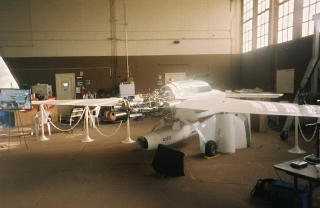 Photo: copyright Dale Amon, all rights reserved
|
Who Are We? The Samizdata people are a bunch of sinister and heavily armed globalist illuminati who seek to infect the entire world with the values of personal liberty and several property. Amongst our many crimes is a sense of humour and the intermittent use of British spelling.
We are also a varied group made up of social individualists, classical liberals, whigs, libertarians, extropians, futurists, ‘Porcupines’, Karl Popper fetishists, recovering neo-conservatives, crazed Ayn Rand worshipers, over-caffeinated Virginia Postrel devotees, witty Frédéric Bastiat wannabes, cypherpunks, minarchists, kritarchists and wild-eyed anarcho-capitalists from Britain, North America, Australia and Europe.
|





I thought turbine pumps were generally (almost exclusively, in fact) used for rocket motors and ancillaries – no balancing of reciprocating masses, much reduced vibration, far fewer moving parts, greater efficiency, lighter construction, etc.
Then again, I’m not an engineer so what do I know?
EG
Of course, if you do it with style, you power your space ship with Dr. Pepper and Sour Cherry Bubble Yum.
Let me point out, just to be a smartass, that the store was out of Sour Cherry Bubble Yum.
As for piston versus turbine, I can think of three reasons to go with the former. The first is the lower speeds involved feduce the problems of lubrication in a vacuum. The second is that it is far easier to define a package with the required input and output parameters. The third is that there are far more people out there building piston steam engines (altho I myself subscribe to the Tesla turbine mailing list and plan to make one from old hard drive parts).
triticale:
So why do rocket designers invariably specify turbines? Isn’t lubrication less of a problem in relation to weight, complexity, efficiency, etc? I mean, if you can successfully run turbine pumps handling cryogenic liquids right next to an incredibly hot rocket motor running in space, what’s the big deal with lubricating a small steam turbine?
I don’t understand why it is necessarily easier to specify the input and output parameters for a reciprocating engine than a turbine. OTOH, I can see why it is easier for the home machinist to make a reciprocating engine, and perhaps that’s the real idea behind it.
I really would have thought the cheap, simple, reliable and lightweight option would be the one to go for.
EG
Does this qualify Barbara Plett for bereavement leave?
Sorry, for wrong post and multiple posts.
Euan: Why turbines? Fewer moving parts, and longer MTTF (Mean Time To Failure). Turbines also have more capacity (they can move more fluid per unit time).
IIRC, the XCOR rocket engines don’t employ turbo pumps, but reciprocating piston pumps, for faster control response. (Since the turbo pumps would have significant angular momentume at speed that would have to be bled off in order to kill the throttle.)
Reading between the lines, it seems to me they are trying to use exhaust bleed gas to power the fuel/oxidizer pumps. This is relatively straightforward with a turbo pump solution, but not as easy to do with a piston pump. They already have a home-brew solution in house, but are offering this prize to see if the wider steam engineering community can do better.
I’m not aware of anything in commercial steam engineering applications within the RPM and weight parameters of the contest. As I see it, the major challenges will be:
1. Thermodynamic efficiency: within the space & weight parameters, will there be enough expansion volume for the working fluid? How do you dump the excess heat?
2. Reliability: Tellingly, the prize rules only specify a few hours worth of working time. Can you get reliable sealing?
3. Resonance vs rotating balance.
Maybe a Wankel rotary piston approach could work, but that seems to be outside the parameters of the prize rules.
When it comes to heat engines, I’ve always been a fan of Stirling engines. Quite apart from anything, the space environment gives you the opportunity to get some really radical delta-T into your Carnot efficiency cycle. Paint one end black and polish the other (then focus sunlight on it). Handwaving like Ken Dodd here, but a helium-based captive piston Stirling design with a 1000C delta-T would make an outstanding power supply. I’ve seen one end of a Stirling engine glowing dull orange while liquid air condensed on the other end.
Perhaps our resident fluid mechanic (Michael Jennings) would care to comment.
It’s just a shame that there’s so much ‘per ardua’ in the way. Western civilisation seems to be running around like a giant, headless chicken, just now. Why can’t we focus on the genuinely important goals? And I *do* mean space…
The point of using a piston pump is:
a) development costs are very low (this greatly reduces costs, since rockets have been described as ‘a pump with a rocket attached’)
b) piston pumps are far safer (turbopumps tend to fail catastrophically when blades crack)
c) piston pumps are heavier than turbopumps, but not enormously so